













Johnson leaves Springfield 'determined' after pushing for new city revenue and against Bears suburban move
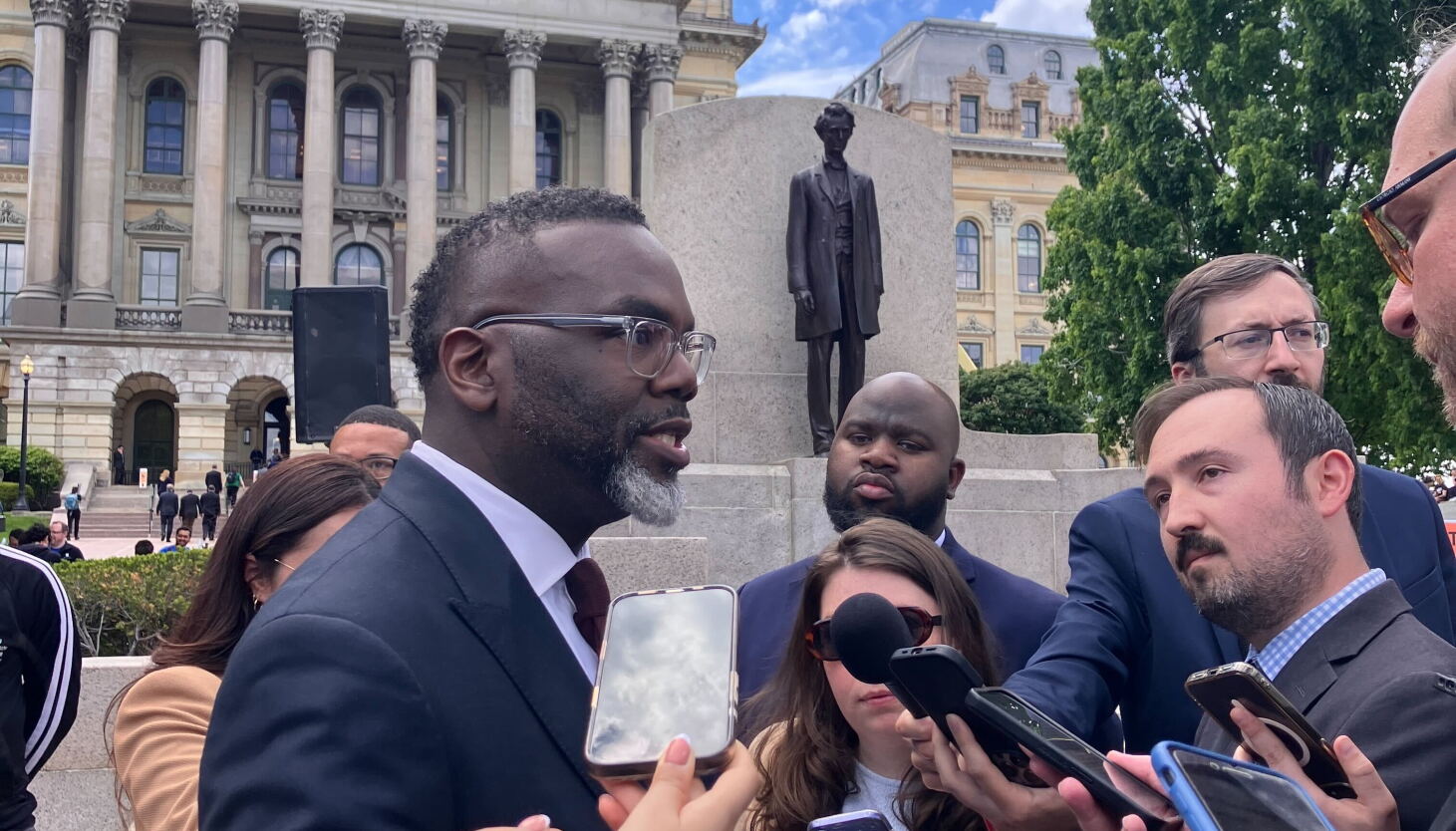
Mayor Brandon Johnson says he feels “determined” after a 48-hour lobbying trip in Springfield where he pushed for more revenue from the state and aimed to stymie a megaprojects bill sweetened with tax incentives to keep the Bears in Illinois.
“We still have a little ways to go as it relates to ensuring that our budgets are not balanced on the backs of working people. ... But [I’m] determined,” Johnson told WBEZ Thursday on his drive back to Chicago.
Johnson’s Springfield sprint included a dinner with members of the legislative Black Caucus, meetings with House Speaker Emanuel “Chris” Welch and Senate President Don Harmon, a Latino Unity Day event and a news conference with the Metropolitan Mayors Caucus.
The mayor did not meet with Gov. JB Pritzker, who paused public events this week while recovering from a routine outpatient procedure.
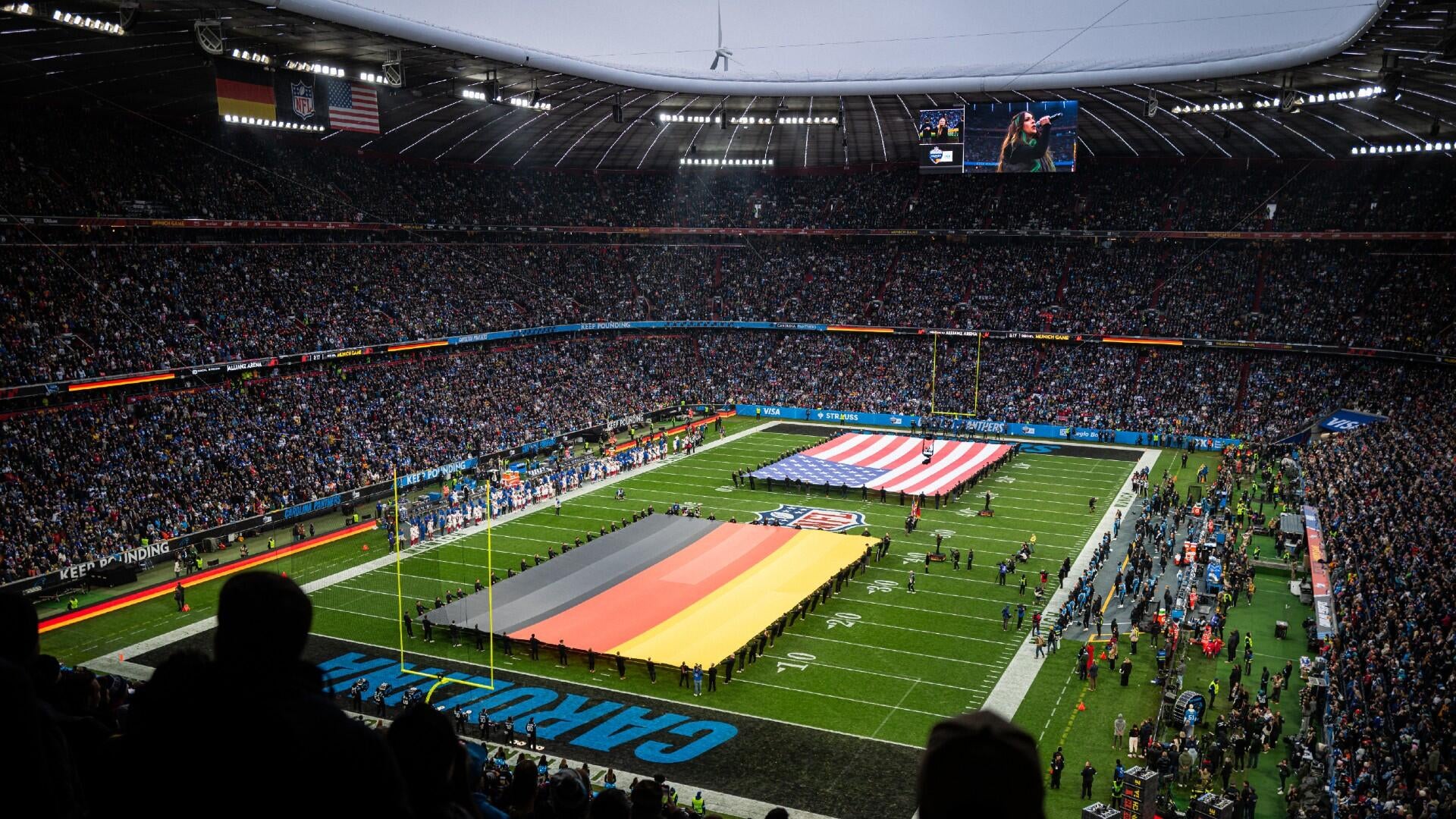
Much of the attention around Johnson’s statehouse trip was on a megaprojects bill that would allow the Chicago Bears to negotiate payments rather than paying property taxes to help them build a new stadium in Arlington Heights. Johnson aims to thwart that bill as he pushes to keep the Bears in Chicago.
But Johnson remained tight-lipped Thursday about his ideas for an alternative plan. He referenced a detailed, $4.7 billion domed lakefront stadium plan that he endorsed in 2024, but would not say if he wants lawmakers to take up that specific proposal or give him time to craft a new one.
“What I want is a real, fair opportunity for the city of Chicago to be able to ensure that as we compete for massive development, that we have the tools that we need,” Johnson said. “Remember, the Bears shifted their energy because there was no reciprocity coming from the state of Illinois.”
Johnson’s non-Bears policy pitches to lawmakers this trip were perhaps the most detailed yet in his three major visits to the state capital, which thus far haven’t yielded the types of progressive revenue he campaigned on winning.
Johnson’s main priority this trip was to block a proposed cut to the amount of state income tax revenue that flows to local governments — from 6.47% to 6.28%, according to Pritzker’s office. That would mean a $12.7 million loss for Chicago, Johnson’s team said.
After meeting with Johnson Tuesday, Democratic state Sen. Lakesia Collins, of Chicago, said she’s sympathetic to funding needs for local governments. But “it's just all about like, can we get it done right now? We're reeling in toward the end of session,” she said.
Meanwhile, a Pritzker spokesperson disputed the $12.7 million figure, saying that although the percentage share is decreasing, projected revenue has grown, so dollar amounts will remain flat.
Johnson also wants the state to expand Chicago’s “home rule” authority to enact new forms of what he considers progressive revenue, including a tax on deliveries that aren’t groceries or medicine.
Additionally, Johnson wants to see a payroll expense tax on businesses, which would require authorization from Springfield before what likely would be an uphill battle at City Hall.
That tax, similar to Johnson’s head tax proposal that the City Council rejected, would be paid by businesses, not employees. But instead of a flat rate per employee, which was a sticking point in head tax negotiations, the tax would be determined by wages and would be paid by “large employers with high-wage payrolls.”
Johnson’s push for a head tax last fall is what ignited City Council opposition led by a group of business-backed, mostly conservative and moderate Council members who united to oppose Johnson’s budget. That coalition tweaked the mayor’s spending plan to exclude the head tax.
Johnson said he still sees the payroll tax as a viable option.
“There's no secret that Michael Sacks has actively worked against challenging the ultra rich,” Johnson said, referring to the CEO of a private equity firm and Democratic billionaire who helped fund commercials criticizing tenets of Johnson’s spending plan. “Our effort to make sure that we're working to protect working people, that will be the effort, regardless of those interests that try to stand in the way of it.”
The effect of Johnson’s lobbying efforts, which he says don’t start or end with a trip to Springfield, remain to be seen, with the Legislature scheduled to wrap up its spring session by May 31.
Johnson, who has yet to earn major legislative wins from the statehouse, recounted lessons learned from his earlier experience at Illinois’ Capitol.
“You have to be steady and consistent. If you remember, Richard M. Daley, I think, went to Springfield for 17 years to try to get gun control passed. I think it happened 17 years after he was elected. You have to be consistent. You have to remain engaged,” he said.
What's Your Reaction?
 Like
0
Like
0
 Dislike
0
Dislike
0
 Love
0
Love
0
 Funny
0
Funny
0
 Angry
0
Angry
0
 Sad
0
Sad
0
 Wow
0
Wow
0


